
Classified and critical infrastructure networks form the backbone of national resilience. They manage essential services such as energy distribution, transportation control, water management, and industrial production. Yet these operational technology (OT) environments face escalating cyber threats delivered through physical devices and removable media.
Tyrex provides advanced USB security solutions that safeguard industrial control systems (ICS) and SCADA environments from malware and unauthorised access, protecting both uptime and safety across the UK’s most sensitive sectors.
Securing Operational Technology Environments
Critical infrastructure operators often work within isolated or air-gapped environments where cloud-based controls are not permitted. Software updates, diagnostic data, and system configurations must therefore be transferred through physical media.
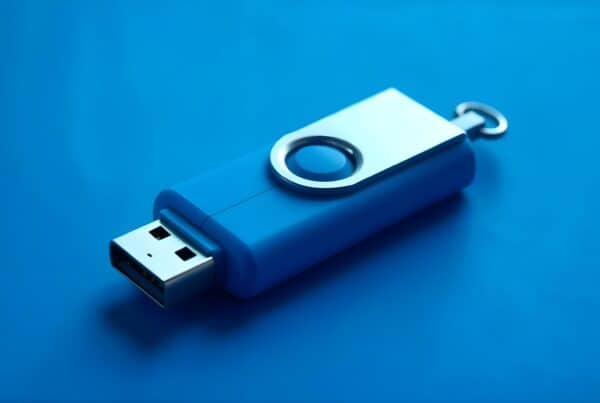
This operational necessity introduces risk. An unverified USB or portable drive can carry malware capable of disrupting entire networks. Tyrex’s hardware scanning stations and “sheep-dip” kiosks create a secure, verifiable process for controlling data flow into classified systems.
Unique Challenges in UK Critical Infrastructure
Air-Gapped but Not Immune
Even disconnected networks can be infected through physical devices used by contractors or engineers performing legitimate maintenance.
Aging Systems and Legacy Hardware
Many ICS and SCADA networks operate on outdated software that cannot support modern endpoint protection, leaving USB-based transfers as the primary vulnerability.
Complex Supplier Ecosystems
Multiple third-party vendors, maintenance contractors, and equipment providers interact with critical systems daily. Without verification, this supply chain activity can expose networks to risk.
Threat Intelligence in the Defence and Industrial Sectors
UK and global intelligence agencies continue to report growing risks to critical national infrastructure. Attacks like Stuxnet demonstrated how a single infected USB drive can compromise isolated control networks.
Modern threat groups have evolved similar techniques, using automated malware loaders and AI-assisted code to target OT systems.
Hardware-enforced scanning mitigates this risk by removing dependency on manual inspection and ensuring every device is verified before access.
For further reading, explore ransomware in the workplace to understand how removable media threats evolve across hybrid networks.
Preventing a Repeat of Stuxnet
In 2010, the Stuxnet worm crippled industrial control systems by exploiting unverified USBs used in nuclear facilities.
A UK energy supplier recently implemented Tyrex scanning stations across its control rooms, requiring all removable devices to pass through hardware-level scanning before use.
This approach detected and removed infected firmware on a vendor drive, preventing potential disruption to energy distribution systems.
The case demonstrates how USB verification can protect critical infrastructure from the same tactics that once compromised global operations.
The Unmatched Power of TYREX: Measurable Success
Common Threats to Classified and Industrial Networks
USB-Borne Malware
Malicious code hidden in portable media can disrupt production or disable safety systems.
Insider and Supply Chain Threats
Contractor access and third-party maintenance increase exposure to infection or data exfiltration.
Operational Downtime
A single infection can halt operations across an entire facility, causing safety and financial repercussions.
Regulatory Compliance for Critical Operations
NIS and NIS2 Regulations
Supports UK and EU legislation for critical national infrastructure resilience and incident prevention.
Defence Cyber Protection Partnership (DCPP)
Meets Ministry of Defence standards for managing cyber risk across supply chains and service providers.
ISO 27019 and IEC 62443
Aligns with international standards for securing energy and industrial control systems.
Advanced USB Security for Critical Infrastructure
Hardware-Based Verification
Dedicated scanning stations isolate and analyse files from removable devices before allowing network connection.
Offline and Air-Gap Operation
Fully functional without network connectivity, ensuring security compliance even in restricted or classified zones.
Multi-Engine Malware Detection
Combines several antivirus and heuristic engines to detect both known and emerging threats hidden within firmware or file structures.
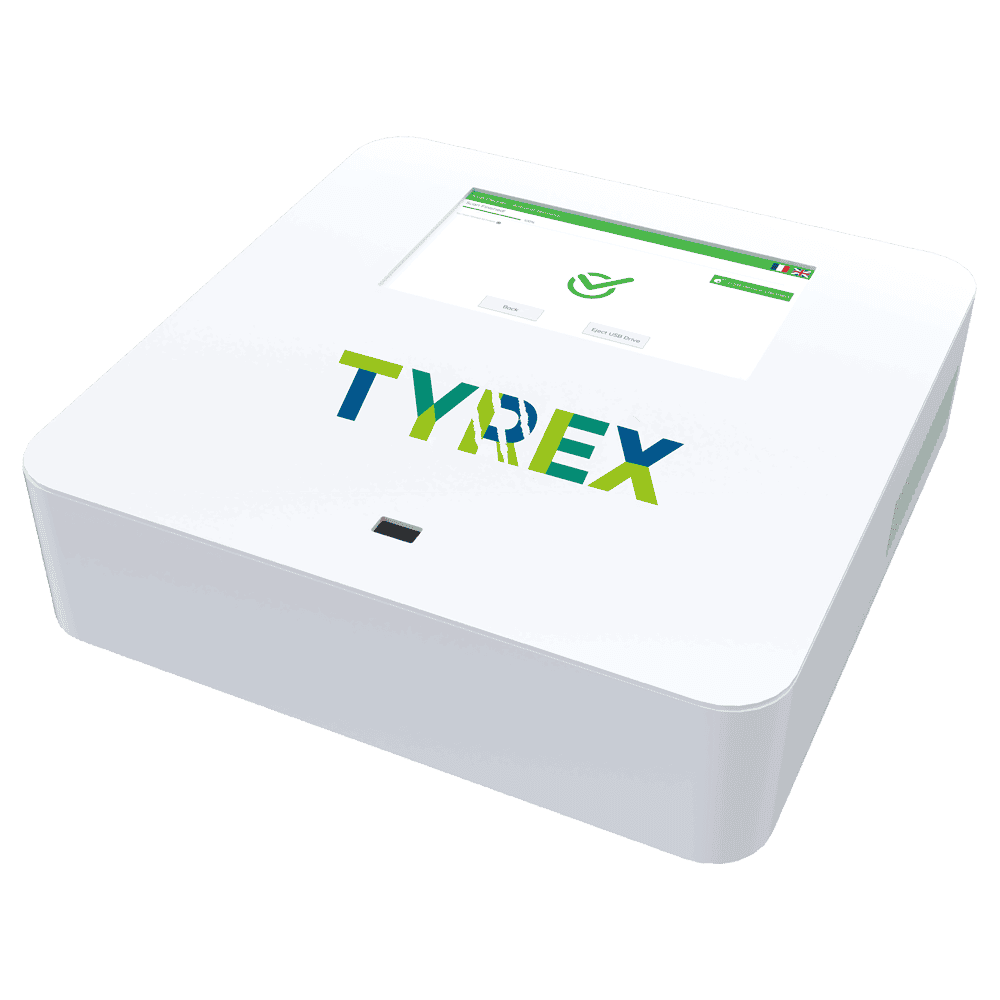
K-REX Console
The CONSOLE can be placed on a desk, which makes it convenient for any standard work environment. This USB media decontamination solution protects your critical infrastructures from cyber threats.
Features
- Available in 4G, 5G, WiFi, wired and offline
- 10 inch HD screen
- Weight: 12kg
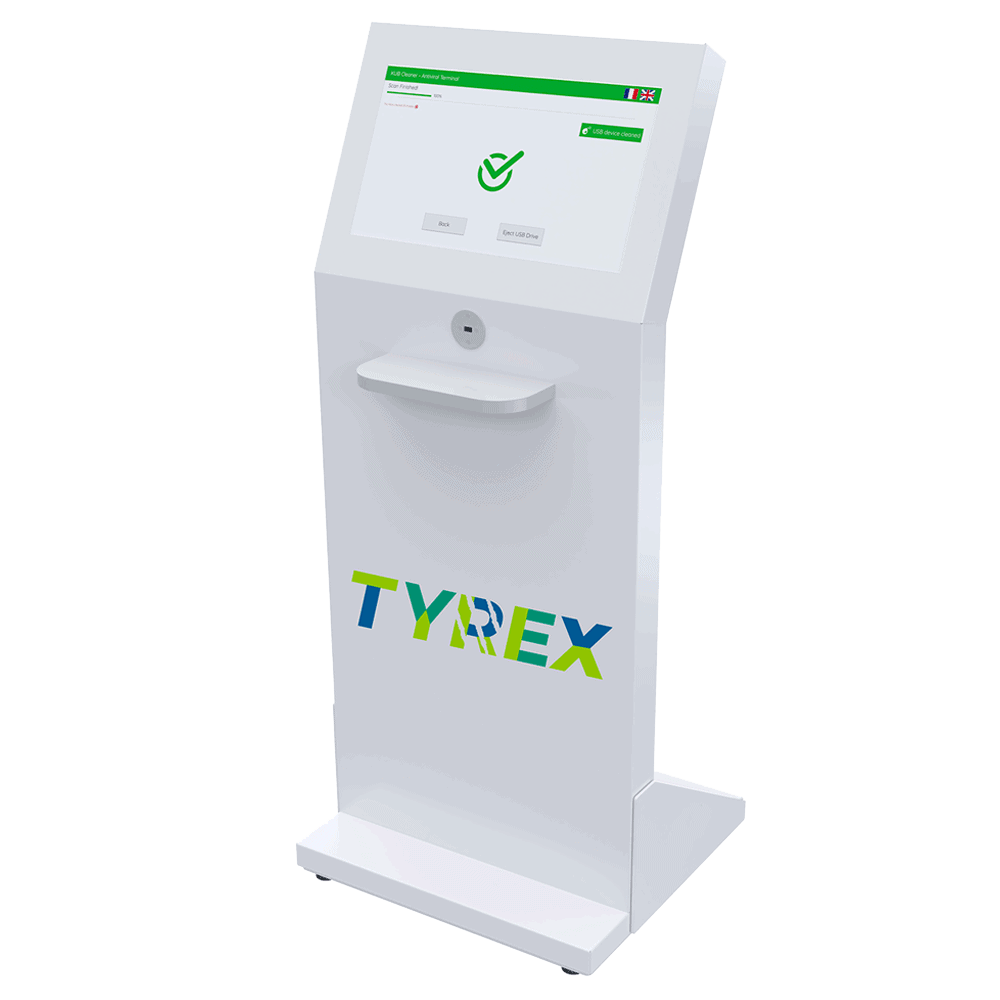
K-REX Totem
The TOTEM can be positionned on the floor, at the entrance of reception halls or in any public areas. This USB decontamination solution comprises a small platform to hold your hard drive during the antivirus scan.
Features
- Available in 4G, 5G, WiFi, wired and offline
- 24 inch HD screen
- Weight: 54kg
K-REX Satallite
The SATELLITE USB decontamination station can be hung on a wall. It is particularly adapted to confined spaces such as ships or meeting rooms. With 5 anti-virus and 2 anti-malware running simultaneously, the SATELLITE is able to scan and clean your USB devices and prevent cyber threats or viruses from spreading through your information system.
Features
- Available in 4G, 5G, WiFi, wired and offline
- 7 inch HD screen
- Weight: 6kg
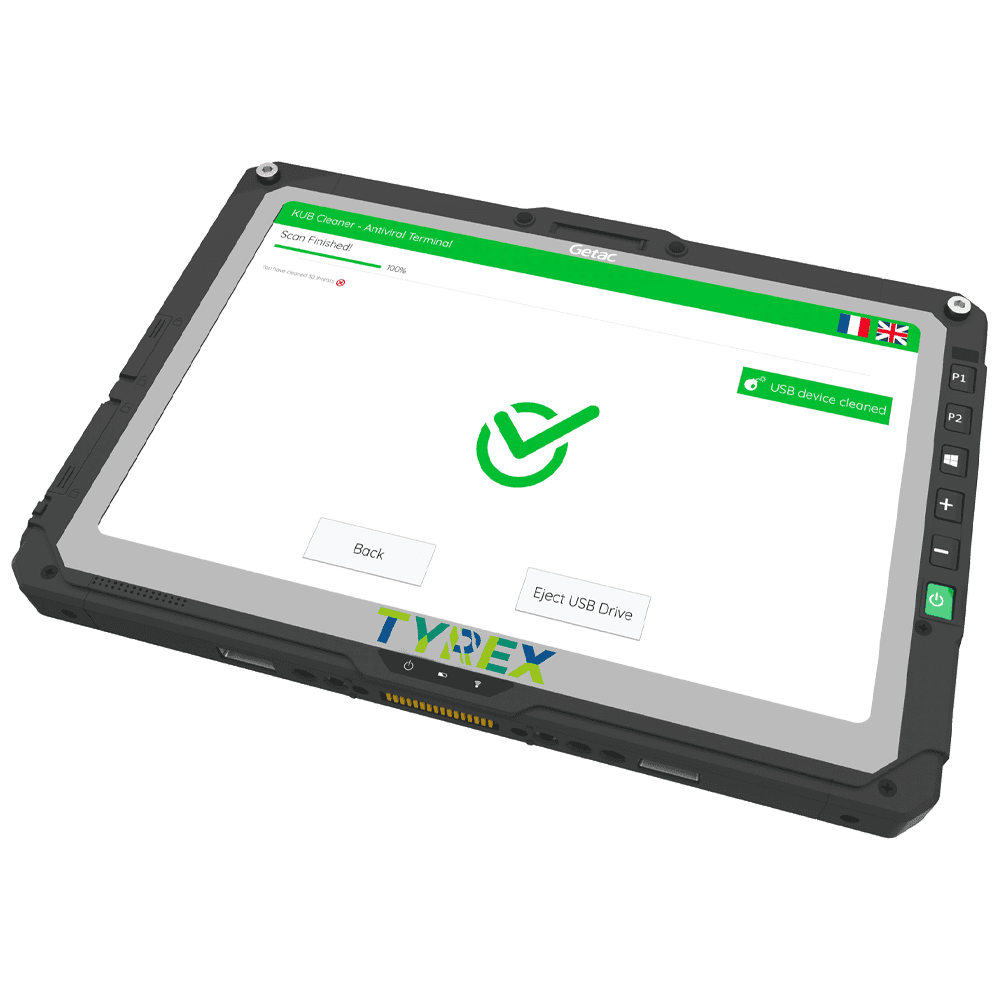
K-REX Mobile
The MOBILE is a movable USB decontamination station. Ruggedized with the MIL-STD-810G and ATEX military standards, it is designed for environments requiring mobility. With up to 5 antivirus and 2 optional anti-malware scanners running simultaneously, it is able to scan any USB or removable devices and prevent malwares or viruses from spreading through your information system.
Features
- Available in 4G, 5G, WiFi, wired, offline and ATEX versions
- 10 inch HD screen
- Weight: 1.3kg
Comprehensive USB Security Framework
Protecting classified networks requires a layered approach that integrates hardware verification, procedural control, and complete audit traceability.
Verification and Isolation
- All removable media is scanned within a secure hardware environment before connection, eliminating unverified data entry.
Detection and Sanitisation
- Multi-engine scanning identifies and removes malicious files automatically, preventing contamination.
Audit and Policy Enforcement
- Centralised reporting provides traceability and policy control for compliance frameworks such as NIS2 and ISO 27019.
Integration and Monitoring
- Seamlessly connects with SIEM systems and network monitoring platforms to provide full visibility and incident correlation.
Building Resilience Across UK Critical Infrastructure
Cyber security in the defence sector and critical infrastructure is now inseparable from national resilience. USB and removable media protection are integral to safeguarding operations that cannot risk compromise.
Tyrex solutions deliver verifiable, repeatable processes for secure data transfer, bridging the gap between operational needs and security assurance.
For further insight into removable media control and industrial cyber defence, check out our resources or explore our complete solutions for protecting industrial and classified networks.
TYREX Protection in Numbers
Latest From The Blog.
Ransomware in the Workplace: What to Do?
Industrial Cyber Security: Why It Matters More Than Ever
AI Malware: Understanding and Preventing Emerging Threats